The Wildlife Trusts, say HS2 is unstoppable

The Wildlife Trusts, say HS2 is unstoppable, and make plans for a green corridor along the route – practical pragmatism or just another surrender? http://ow.ly/xkDpO

Posted in The Environment | Leave a comment

Should water drive the Lakes

A really interesting interview at United Utilities as part of my dissertation really got me thinking about the practical effects that a disconnection from nature can have in environmental policy.

Having good quality, clean, drinking water running at will from your tap is a blessing I think we all forget to count.  It only takes a day visiting a country without that privilege to remind you how lucky we are.  Of course the inconvenience we experience chasing around for bottled water on holiday is a pale imitation of the hardship and life threatening health dangers faced every day by the 748 million people for whom life without safe, clean water is a daily reality.

So when we turn on our taps, how many of us thinks of the huge infrastructure that collects, cleans and transports that water, let alone the myriad of environmental, land use and political drivers at play? To take this a stage further, and look at how it impacts my current project, how many visitors to the Lakes will see it as the provider of water on a massive scale? United Utilities alone provides water to 7 million people and over two thirds of this water comes from upland surface water reservoirs in the Lake District, the Pennines and north Wales.

How many of those Lake District visitors will think about the part vegetation plays in protecting those water catchments, the effects that farming, tourism and other land management has directly on the quality of that water, and of course indirectly on our water bills and ultimately the availability of that clean water.  How many of them are really aware that we are in effect weighing up the contribution of hill farming in supporting a valuable cultural landscape, supported by payments from a European agricultural policy, against the potential ecological and water management benefits which could be realised through a reduction in sheep numbers on the fells?

This is all before we even get into the role that the uplands have in managing flooding.  Though I thought he undersold the interest people have in the environment, a recent blog by George Monbiot highlighted how the recent flooding suddenly, but too briefly thrust environmental issues to the forefront of people’s consciousness.  Sadly, the level of understanding, and engagement with these higher level issues, is too quickly washed away by political expediency and seemingly simple, but ultimately ineffective solutions like dredging.

There is an opportunity in water management which could potentially see uplands managed for better water quality and carbon capture which could see biodiversity gains.  The water framework directive, alongside increasing knowledge of water catchments, flood mitigation and carbon capture could potentially drive exciting opportunities for a new type of cultural landscape, but this is not without its tradeoffs and might involve a lake district which looks a bit different, significant changes in the drivers given to farmers, their values and lifestyles, and the traditional cultural livelihoods, which make up a great part of the way today’s lake district is.  Its a complicated picture, but it relies on the opinions of tourists visiting the Lakes regarding the future aesthetic of the park, and a broader public whose tax money supports both agricultural funding and national park itself.  It is unfortunate then, that this general public is most likely uninformed about the interconnections of these issues, perhaps disinterested, and, as is often the case, disconnected from the services which the natural world provides in our every day lives.

Water is just one piece of the complicated jigsaw of Lake District National Park management.  I’ve been asking people what they think the Lake District is for, an intentionally open ended question to which people quite justifiably answer, ‘people’, ‘nature’, ‘wildlife’, ‘landscape’.  The difficulty is of course, that they all are right, but this week, ‘water’ seems like a pretty convincing answer.
Posted in Lake District Project, The Environment | Tagged , , , , , , | 1 Comment

Being academic, and then getting better

Three days into my dissertation interviews and I was starting to feel like a proper academic.  It wasn’t the interviews themselves, or spending hours writing them up.  It wasn’t continually telling people that I was one, explaining my project and talking about it, even occasionally a bit knowledgably, it wasn’t even the dictaphone (though that certainly helped).  I think the main thing that made me feel like a proper academic, was that I didn’t really know what I thought anymore and was finding myself resorting to the default position – it’s all just very complex…

My project is looking at public perceptions of land use change in the Lakes, and ultimately I want to look into what the general public thinks about the way the lakes looks, how it is managed and ultimately I guess, what it is really for.

Monbiot’s rewilding accusations that the Lake District is being ecology destroyed by the dominance of productionist sheep farming, development of models which talk more about farming ecosystem services than sheep and world heritage site bids which talk of a cultural landscape and not about biodiversity all paint very different pictures of what the Lakes are for, how they should be managed in the future, and more subtle questions about how and why do we fund a national park – are the general public really more motivated by wildlife, or people, adventure, carbon or flood management, and if improving these services means compromising one of those others, or changing the way the Lakes looks or feels, is it worth it.

So far my interviews have shown me a range of interesting and well informed opinions, often thoughtfully argued and well founded, just founded in different underlying ideals and interpretations.  In reality I am often struck as much by the similarity of opinions from diverse and often opposing groups, and it seems that compromise is really understood to be required by all parties.  At the same time it is striking to see how disengagement of different factions, nuances of language, and real  practical tradeoffs and difficult decisions create a highly complex picture which clearly has no easy solution… it is complex…

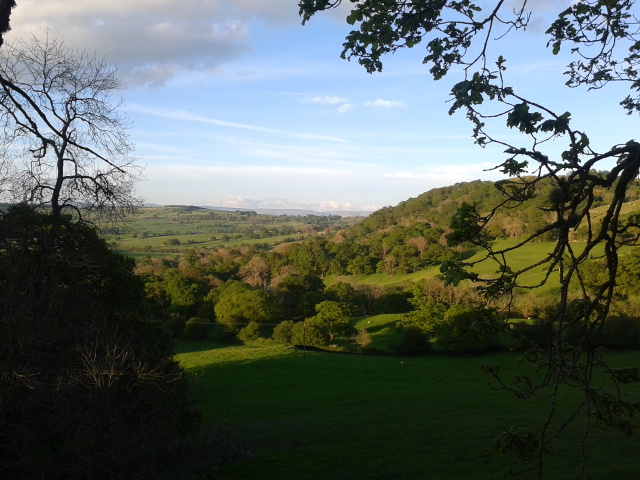
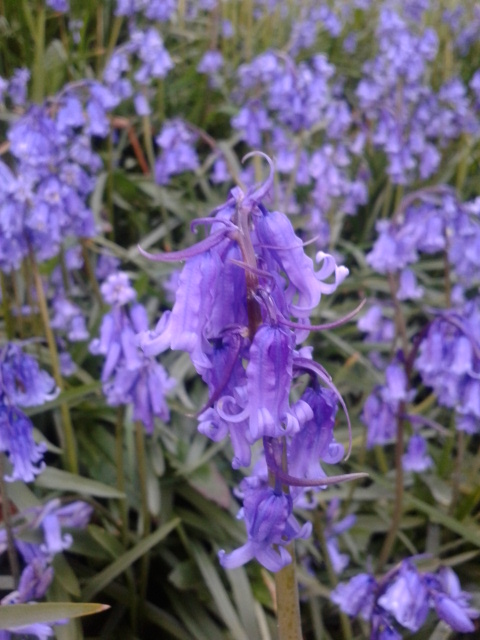
Smarting slightly from this conclusion which I always resent people trotting out, I went for a walk, things always make more sense when walking… and I thought that in so many ways, a few photos snapped on my phone told the complexity and simplicity of the story so much better than many of the words I had been juggling, and probably than I have juggled here.  I still didn’t know exactly what I thought, but I knew what I felt, and I felt less academic… and I felt better.

Image

Image


Posted in Lake District Project, The Environment | Tagged , , , , , | Leave a comment

Disconnect from nature…

I’ll probably never read as much as I am doing at the moment about one subject – a masters dissertation is a pretty rare opportunity to read a lot on a very specific topic.  My topic – land use in the Lake District is, thankfully, a wide reaching one and I have been reading about payment for ecosystems services, historic land use, the history of national parks, the state of biodiversity in the UK and much more.

Having spent today at a conference hosted by the Blueprint for water coalition I’d spent a lot of the day thinking about the economic drivers required to bring water catchment management into the main stream of water companies operational business.  Also on more human issues a really interesting question got me thinking about the difficulties and complexities of payment for ecosystems services – if the activities of farmers impacts water quality, one speaker suggested, then a polluter pays approach would suggest they should pay to ensure the water is clean.  Instead we are looking at payments for ecosystem services, in order to get farmers to pollute the water less… on the other hand, surely farmers could equally argue the irony of water companies, who sell to the public, something which falls freely and cleanly from the sky is another example of the strange and complex economic relationships we have with natural resources.

It was on the train home, reading something which I first thought was pretty unconnected to this whole debate though, that really got me thinking.  I read a report discussing the role of the outdoors and nature in providing health benefits.  However, one fact stood out: in the year 2002-3 a survey showed that 40% of the adult population NEVER visited the countryside at all, during the entire year.  Having spent lots of time, following the project wildthing program, thinking about the lack of engagement kids have with nature, it was striking how much broader that problem is.  More worrying still was the report stating that the main reason was not lack of access, but simply lack of time, and more worryingly still, lack of interest.  40% of adults, just don’t want to go to the countryside.

In the context of water management I reflected on the often discussed concern that kids don’t understand their relationship to nature and I had to begin to wonder how many of those 40% of adults would really understand where the water coming out of their tap comes from, let alone the complex land use issues affecting that water and that, perhap, addressing this is a major element if payments for ecosystem services and acceptance of public subsidies to provide these services is to reach the main stream.

Posted in Outdoor Adventures, The Environment | Leave a comment

#Wildtime

Easter holidays have been a great chance to finally get some real wildtime – a week in the Lakes, starting to look at my upcoming dissertation, then a week of rock climbing in North Wales which incorporated everything form sunny rock to driving rain, wind and fog in the mountains and five happy days in my tent.

Image

So it seemed apt to finish the holidays with a trip to spend two days as a volunteer in nature’s marketing department.  The Wild Network is a growing group of people concerned about the loss of access we all (but especially kids) have to the great outdoors and their increasingly disappearing connection to nature.

Feeling freshly invigorated from my time in the mountains and also realising how lucky I am to get these opportunities – It was really inspiring to see nearly 100 people coming together, giving up their time and skills to try to broaden this access and give more people this opportunity.  On a personal level it was also great to find myself at perhaps a natural meeting point of my past work in expeditions and outdoor adventure, and my future work in environmental policy – especially given an increasingly growing feeling that giving people a feel for and connection to nature, has a vital role to play in shifting the policy agenda to a more environmental standpoint.

It was also really refreshing to approach challenges with a strict 48 hour deadline – the ideas under discussion had to be discussed, scoped, and if possible pro typed solutions developed all before the doors of Ashton Court Estate slammed shut at 5pm on Saturday!

It was really amazing to see so many ideas develop and really moving forward on the sort of timescale it often takes just to set up an initial meeting on an issue!

So a big thanks to The Wild Network, and the the organisers of the event Swarm.  I look forward to seeing the ideas come into production and to working with the Network in future.

Posted in Outdoor Adventures | Tagged , , , , | Leave a comment

Floods, wolves and political leadership

A busy few weeks back at Uni and much to think about and little time to write about it!

Therefore in the absence of time to write a full blog I thought I would share a few links to things everyone should read or watch:

1 – amid the terrible scenes of flooding we have seen in the UK over recent weeks, we have seen return to fearful, reactionary grandstanding as the Daily Mail call for foreign aid money to be redirected to flood victims and the conservatives promise no expenses spared and as much dredging as you want in the face of strong arguments and evidence that this won’t help.

For two interesting and important takes on the situation see:

Nicholas’ Sterns powerful article in the guardian.

And George Monbiot’s article on flooding and the agri-environment solutions we should be looking at.

Getting rather depressed about the politcal reaction to the flooding I was excited, (if cynical that it could just be grandstanding in the opposite direction) to see Ed Milliband filling the weekend papers with what seemed to be a bit of a political epiphany. Let’s hope that he and others are having a genuine realisation that we need to address the underlying problem and that the silver lining to the terrible scenes we have seen in recent weeks could be the appearance of some genuine political leadership in the mainstream of  environmental and climate change politics

2 – To move away from flooding – I spent a few weeks of this term, working on a project to looking at modelling the possible reintroduction of wolves into Scotland. This video captures the ecological vision, if not some of the more boring practicalities!

Posted in Outdoor Adventures, The Environment, Uncategorized | Tagged , , | Leave a comment

Failure and entrepreneurial environmental solutions

I attended a lecture this week by John Ashton, who spoke about political challenges in addressing climate change. He gave a quote I had not heard before and then asked how many of the attendees agreed… do you:
“Conceived of as an intellectual challenge for humankind, the increasing threat arising from self-induced global warming clearly seems to exceed the present cognitive and emotional abilities of our species. This is the first truly global crisis, experienced by all human beings at the same time and in a single media space, and as we watch it unfold, it will also gradually change our image of ourselves, the conception humankind has of itself as a whole. I predict that during the next decades, we will increasingly experience ourselves as failing beings.”
I put my hand up – I thought I did agree – I am certainly prone to pessimism on occasion.  But I rose my hand with little enthusiasm or conviction and couldn’t quite work out why.
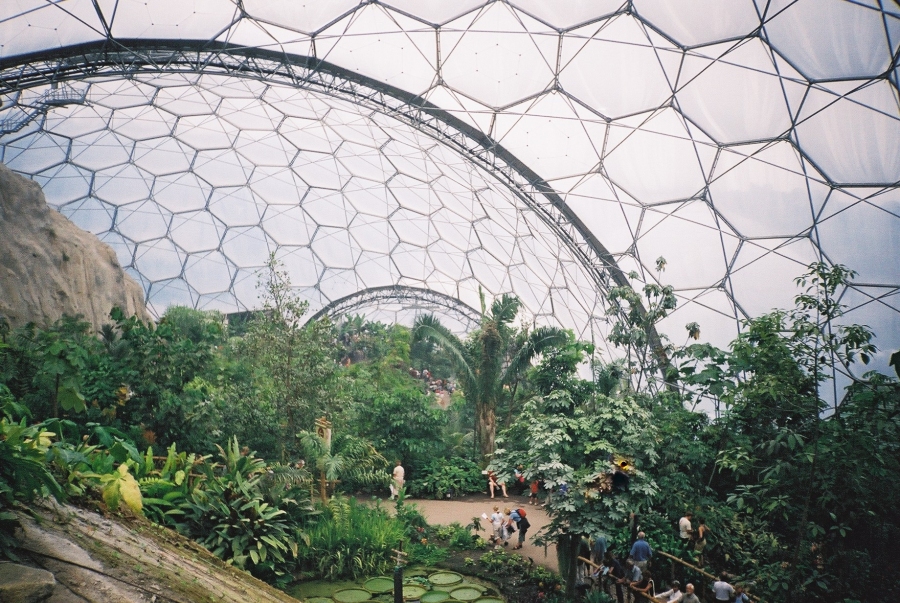
It got me thinking back to a recent visit to the Eden project where I had strange mixed emotions, on the one hand feeling inspired by the vision, determination and drive which had created it, yet on the other wondering if in the grand scheme of the environmental problems we face, could even such a grand vision really make much difference.
Huge vision, a tiny brick in the wall?

Huge vision, a tiny brick in the wall?

 I was still thinking about this whilst listening to Professor John Fa from the Durrell institute speak about how we decide conservation priorities.  I began skeptical about the approach of Durrell, the focus on such isolated and endangered species again to me felt it suffered from a lack of ‘bang for buck’ and in a way the same nag which bothered me at the Eden project – is this the best use of energy, vision and money – will it really make a difference in the grand scheme of things.  However, his argument was convincing; if we accept that, as well as large, ecosystem scale conservation, part of the problem is to stop things going extinct – then it makes logical sense to focus on those closest to doing so.  It is not the whole problem, quite possibly not even the most important problem.  But it is one that Durrell are uniquely set up and skilled to do – this is their brick in the wall.  They should focus on doing that and doing it as well as they can, freely admitting that this in itself is far from a perfect science.
And I had a epiphany (or at least a mini-one).  I often fear, and many in my generation and the younger one are often accused of this, that I am apathetic.  I am not, and in fact very few people I know are.  They do care, and think about these issues a lot.  What I think they are is overwhelmed by hopelessness and perhaps even more than that, they are afraid of doing the wrong thing, of failing.
Yet failure is at the very heart of all entrepreneurship, or at least the ability to see failure not as failure, but as progress, as lessons learnt.  I understood why I wasn’t sure whether to raise my hand – I think we may begin to experience increasing failure – but if so, it could be first step towards a more entrepeneurial approach to finding solutions.  The sooner we are commit to trying things, to making mistakes and learning from them, the sooner we will move forwards.  The brick in the wall theory is far from new, but, not for the first time I resolved to set aside skepticism and fear of failure – to spend less time wondering if it is the right brick, or if I am going to do it wrong – and get on with building the wall.
Posted in The Environment | Tagged , , , , | 4 Comments

One to watch

At the fear of repeating myself, everyone should watch this… http://www.gapminder.org/videos/dont-panic-the-facts-about-population/ brilliant statistics, brilliantly communicated.

Posted in The Environment | Leave a comment

Top 10 continued!

Here’s numbers 5 to 10 of my top ten facts, thoughts and meanderings:

5 – What to conserve and why – if the key to finding solutions is defining the problem, and a problem is the need to move from one unwanted situation to another preferred one – then what is the destination of environmental problem solving? Are we on a moral crusade to protect and conserve, are we just looking to protect the environment as a means to an end, a provider of ecosystem services and a supporter of human wellbeing. What is natural, what is wild, and what does mankind want or need…

6 – Economics Vs the rest The development of environmental thinking can be seen as three epochs (Mazmanian and Kraft).  The first saw the introduction of centrally led command and control measures such as the introduction of air pollution controls, Environmental Protection Agency etc brought in to deal with a ‘wild west’ of unregulated use of chemicals, pesticides and industrialisation.  As this command and control was increasingly seen as overbearing, expensive and restrictive we saw a move to the markets – a reliance on market incentives, privatisation and a balance between environmental and other factors. Finally we find ourselves in a third epoch, a complex blend of institutions and concepts with over-arching ideas such as sustainable development, as wide reaching and powerful as they can be confusing and wooly.  Creating the right blend of concepts, agreeing and developing understanding of what they mean and building political institutions capable of delivering them are perhaps the keys to successful environmental policy in future.

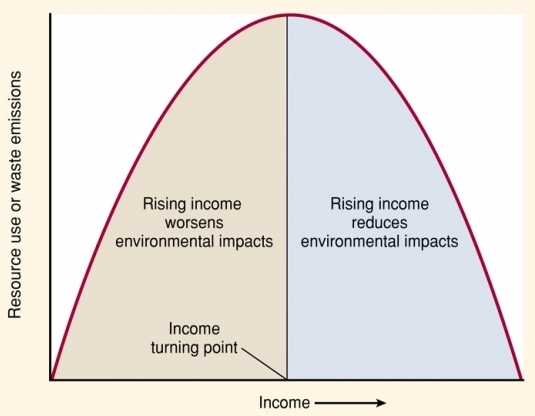
7 – Decoupling growth from damage Perhaps the most fundamental question facing environmental economists and all of us more generally is can we continue to grow but reduce the harmful effects we have on the planet.  The concept of the Kuznets curve is one theory to suggest we can – that we develop to the point that we have the technology, wealth and demand for more environmentally friendly industry, a move to more service based industries and less pollution – but can this be achieved, is there real evidence of it happening, or is it just the result of developing countries exporting their dirty business to other poorer parts of the world.

kuznets

8 – How do we decide policy? Getting insight into how government policy is made has been one of the really interesting elements of the course – particularly looking at the badger cull but also other areas such as biodiversity offsetting as part of the planning process and the government’s response to ash die back, it has been fascinating to see how science, public opinion, the immediate demands of policy to make decisions and the acceptance of uncertainty of scientists combine. It has really got me thinking about effective interaction between science, economics, environmentalists, the general public and others across the multidisciplinary scale.  This is crucial if we are to make good, sensible decisions and policies – but this is far from being as easy as I may have naively thought – many stakeholders just aren’t sure what should be done, and for the others who think they do there is the difficulty of making, proving and arguing their cases in ways that others with a completely different background, social influence and even way of thinking will understand and accept.

9 – Is population really the problem? It seems a simple argument – there are just too many people… and if we have too many people – we cause too much damage to the environment.  Whilst this argument is not completely wrong – clearly population growth is part of the problem – it is far from the whole picture.  For starters, the Limits to Growth style argument that we are stuck in perpetual exponential population growth is not really borne out by the figures – we are reaching the point already where more than 50% of the population of the earth live in a country where the birth rate is below the replacement rate – and most predictions agree that whilst we will continue to see growth for a while yet, population will flatten off at around the 10 billion mark.  This is a lot of people – but it is not un-supportable – what is, is the rate of consumption and that rate of consumption is far and away greater in developed countries.  One striking example is car use.  China is developing rapidly. In 2015 they will have as many cars as the US, but if they were to reach the same per capita car ownership as the US, they would need to import more oil per day than the current global daily production…

Two great further reads / watches on this subject: A video about overconsumption Vs overpopulation (if you can’t manage the whole thing I recommend my new favourite science presenter at 12mins 40secs in!), there is also a great blog by George Monbiot on this subject.

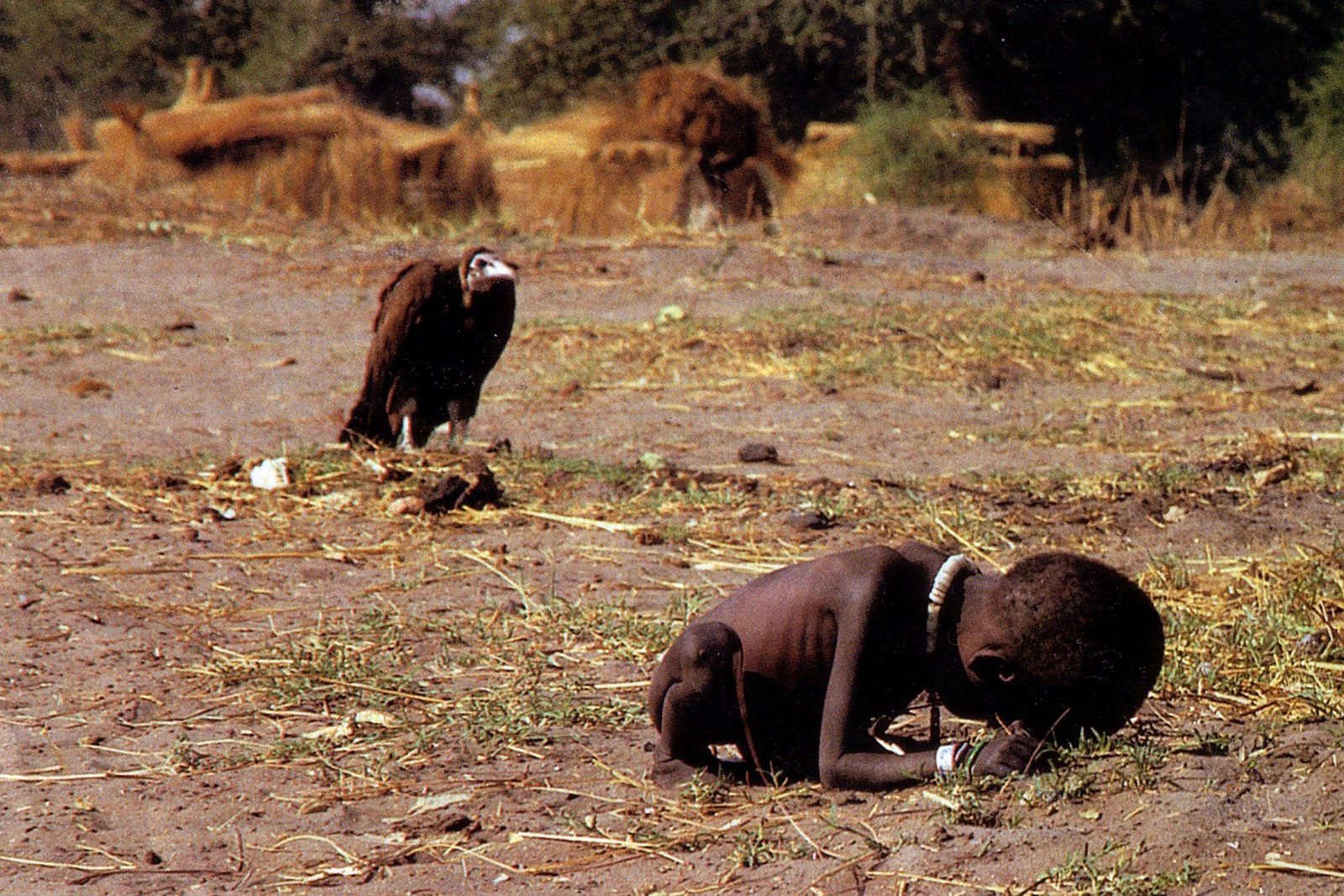
10 I am fascinated by facts, science and numbers – concrete information and proof which allow us to know what we should do.  I also love debate, discussion and big ideas.  But over the course I have also started to think a lot about the need not only to educate, to discover but also to move people.  Real change comes from not only understanding, but from believing and from feeling and sometimes a picture paints 1000 words… whilst I will take away many facts and figures from this first terms and many more ideas and thoughts – I think this image will still be the most lasting thing…

Kevin Carter

Posted in The Environment | Tagged , , , | Leave a comment

Environmental Technology – Top 10

As the pace of the course picked up and my exams drew close the blog entries reduced and my attempts to share what I had learnt took a bit of a dip!  So now, emerging from exams, Christmas and too much turkey I set myself the task of summarising what I learnt in a top ten list of facts, thoughts and images… I fear none can do the huge topics they refer to justice, but hopefully they might get a few people thinking and I’ve included some links etc for anyone who is interested to know more…

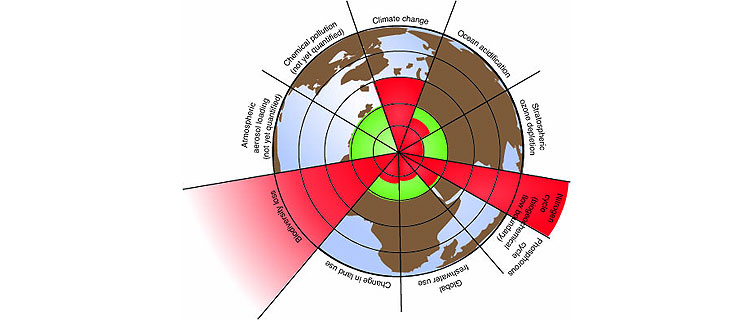
1 – Limits to growth and boundaries? A key area of discussion cutting across ecology, economics and policy is whether the environment and the ecological services we receive are an endless resource which can sustain continued growth, or one where any loss is tragic and devastating – or more complicatedly a chaotic system with unpredictable boundaries and non-linear, unexpected affects.  It seems intuitively clear that there are limits, but what they are, which key ones we should be focusing on and what the effects will be if we pass these limits is far less clear – one interesting and widely taken up answer to this question is here:

rockstromFor those who’d like a bit more about Rockstrom and his ideas – see the very accessible lecture he gave at TED, well worth 15 minutes with a cup of tea…

2 – What creates change? – we have been quite successful in dealing with certain environmental issues such as factory emissions, acid rain and CFC damage on the ozone layer, but much less successful in dealing with climate change – there is a finely balanced cocktail of self-interest, clear cost benefit data, convincing science and perhaps most crucially viable alternatives creating market solutions which seems to drive and enable political consensus and major change… but where there is a lack of one or more of these elements, achieving this change is a huge challenge which seems beyond the leadership abilities of current institutions.

3 – The environment has huge economic value… and no economic value – there is general agreement that the environment has a considerable value – it provides raw materials, regulating services and the underlying provisions; water, climate etc on which all of our economic systems rest. At the same time, in the majority of situations market values for these services do not exist, and attempts to create values are riddled with difficulties.  Perhaps one of the most famous examples, Constanza et al, evaluated the annual value of ecosystems at approx. $33 trillion – approx. twice the annual GNP of the planet.  In strict economic terms this calculation and its assumptions have been highly questioned but at the same time it seems to give an order of magnitude scale which has some credence and a correlation with other studies suggesting we need two planets to support the lifestyle we are developing.  There is a danger in using these highly controversial and debated figures but perhaps a higher danger in using no value at all.

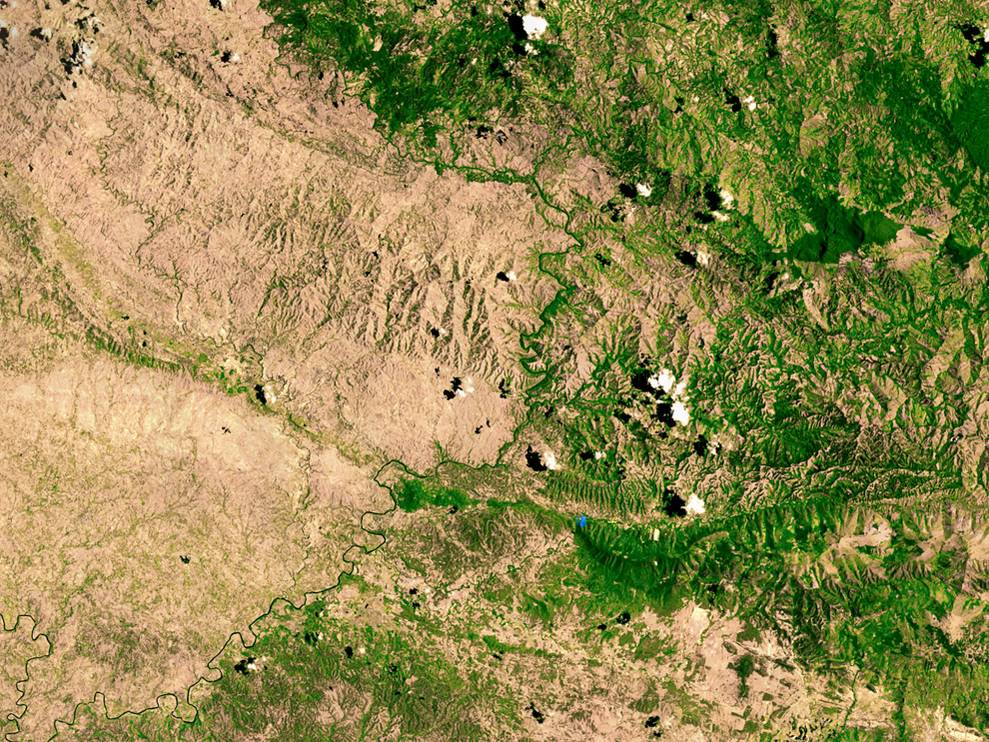
4 – Poverty, development and the environment The interdependence of poverty, development and the environment is a huge topic and I could point to endless reports and surveys making this link, notably the Millenium Ecosystems Assessment, the WWF Living Planet Report, Brundtland’s ‘Our Common Futures’ and many more… but I think a graphic representation is perhaps best – an aerial photograph showing the deforestation in Haiti set starkly against the lush protected forest of the Dominican Republic:

dominican5 – What to conserve and why – if the key to finding solutions is defining the problem, and a problem is the need to move from one unwanted situation to another preferred one – then what is the destination of environmental problem solving? Are we on a moral crusade to protect and conserve, are we just looking to protect the environment as a means to an end, a provider of ecosystem services and a supporter of human wellbeing. What is natural, what is wild, and what does mankind want or need…

Next 5 in the top 5 to follow in the next few days!

Posted in The Environment | Leave a comment