Is the art of spin dead?

The Nature Check report published today sadly paints yet another picture of a government failing to meet its commitments, let alone its over arching claim to be the greenest government in history.

The report rates the Government as failing in 9 out the 25 commitments reviewed, showing 12 rated as amber (moderate progress) and only 4 as green (good progress). This is not a disastrous picture but clearly falls short of elaborate claims about being the greenest government in history.

What is perhaps more alarming, and surprising is that not only do the government seem unable to meet their commitments – but they can’t even come up with a decent spin of the reasons why.  Defra resorted to simply saying, “well, its just their opinion”, “we don’t think their opinion is fair”… not seeming to recognise that at least the opinion of 40 organisations involved in this work day in day out, may be worth considering and discussing.

Worse still Owen Paterson, being interviewed on the radio this morning, used the ludicrous argument that the conservative party were indeed the greenest government in history – why?… of course the answer was the growing number of otters in our waterways and the reason for that… the last Tory government’s privatisation of the water industry.

Whatever truth there may be in this, it seems telling and frankly embarrassing that a government minister, when challenged on specific targets not being met in this year, he looks back to a decision made 30 years ago, with no environmental motivation, as his key counter evidence of the government’s commitment to environmental leadership…

That this is the best he could come up with is bad enough – but that it also represented his best attempt to spin the story was sader still – if I expect a politician to be able to do something – it is at least to be able to spin…

Posted in The Environment | Tagged , | Leave a comment

Chilling images

Having just experienced 45 minutes of chilling images of man’s effects on the environment this one I found particularly striking.  It is called ‘The Survival of the Fattest’ by Jens Galschiot and shows an overweight Lady Justice figure, representing the rich industrialised world, on the back of a thin, Africa man.  Powerful stuff…

Posted in The Environment | Leave a comment

A bug’s life

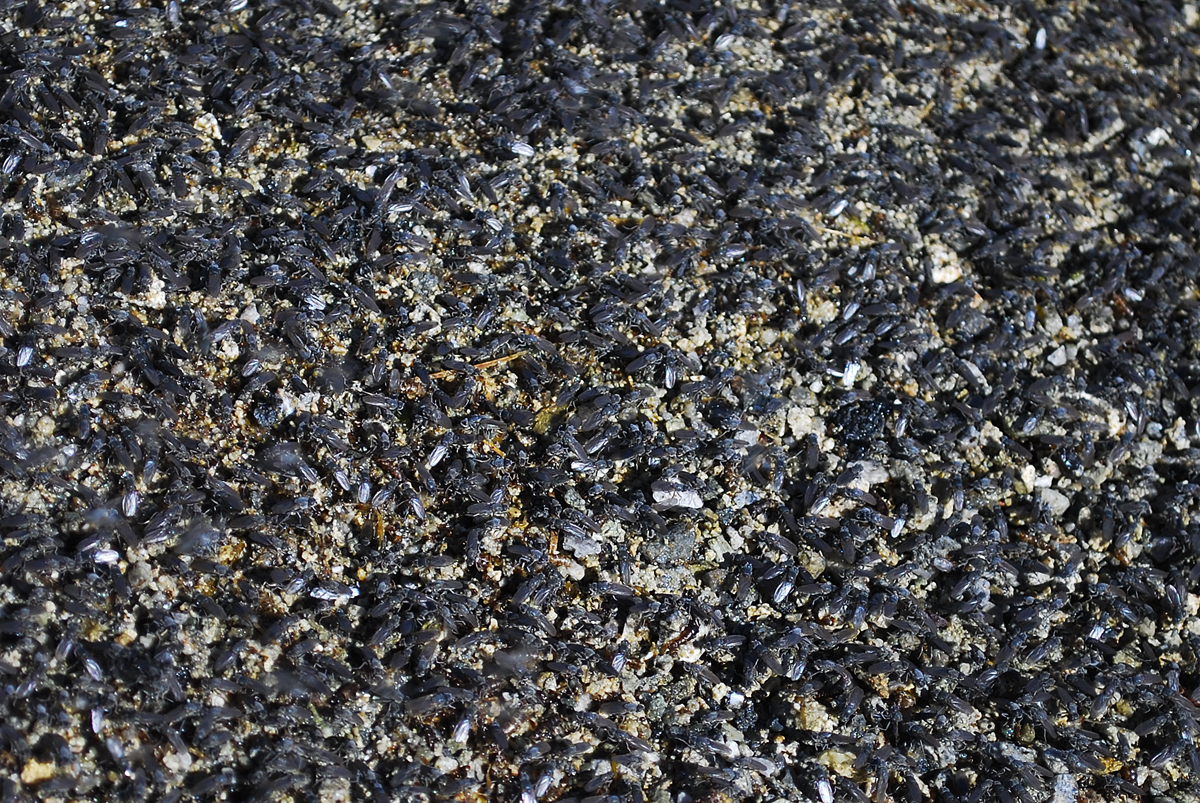
Another trip up to the Lakes and another chance to reflect on some of the more confusing elements of exactly what conservation should be all about. The opportunity for pause for thought this time came from Rachel Carson’s, seminal book “Silent Spring” and a fly infestation at the farmhouse we were spending the weekend in!

Image

Carson’s book describes what sounds a bit like a wild west of pesticides and herbicides across the states in the 50s with descriptions of planes flying overhead liberally spreading chemicals not only over crops but them landing on people, in gardens and killing wildlife and livestock.

She powerfully describes the rapid and almost indiscriminate spread of chemicals as a method of controlling ‘pests’. Whilst there is no question that pesticides have served a valuable purpose in increasing food production they have also caused many problems. Interesting angles which Carson considers are how we come to label certain species as pests – and also how their wider role in the ecology of an area can be forgotten. Or alternatively how, in an attempt to kill off a pest, we can actually kill off another species which was actually helping us kill off that very pest. She points to an amazing example of this with the ‘scale’ a bug which was causing major damage to the California citrus industry, until the introduction of an Australian beetle which managed to control the scale in just two years… until farmers began to experiment once more with pesticides and managing to kill off the beetles with a resulting resurgence in scale.

With all this running through my mind an insect infestation of the house where we were staying was an ironic and eye opening coincidence. As we reached immediately for the bug spray (and what else can you do when opening a curtain releases hundreds of flies to swarm all over your bedroom?!) I wondered what roles those flies where playing in the ecosystem, and what effect the fly spray was having…

Unfortunately for anyone who has spent any time with me recently that got me back to thinking about the badger cull (I have become a badger bore in recent weeks). The farmer and his gun is really only showing the same reaction as me and my fly spray, the desire to remove an annoying and potentially disease spreading pest. I started all my thinking on the badger cull (and I am not sure it has changed) with a simple, but I think important premise than killing wildlife to save cattle is wrong. A challenging question was, how far do you push that philosophical point, what if the UK dairy industry was about to be wiped out by TB. To extend the argument further, where do you draw the line on wildlife. If we could wipe out the female anopheles mosquito overnight and stop malaria in its tracks – surely we wouldn’t be complaining too much about the mosquito’s right as wildlife and I think if we are honest we’d all love to see an end to midgies – so are we left with the uncomfortable conclusion that my principle is just killing nice fluffy wildlife is wrong – but annoying, little wildlife is fair game… It feels a slightly trite argument – it probably is ok to want to save badgers, but not mind losing mosquitos or midgies, but perhaps we are, as usual wandering in a large grey area with more questions than answers.

Posted in Outdoor Adventures, The Environment | Leave a comment

Thinking about models…

This week I have been thinking about models, and not the glamorous type, in fact rather the opposite. The types which seem to mainly predict catastrophe and environmental collapse.

Image

I’ve been focusing a lot on The Limits of Growth, the 1980s book, discussing a dynamic systems model of the world. It uses an essentially simple premise – that of feedback loops, for example in population. Population, in simple terms is a product of the interaction of two feedback loops, one positive (birth rate) the other negative (death rate). In the world as a whole, the birth rate is greater than the death rate so the population grows. The added complication is that in the following year that birth rate is then applied to a new (increased) population. So instead of growing at a steady rate, the population is continually increasing by a multiple, and therefore growing exponentially.

Obviously in an attempt to model the world, there are lots of other feedback loops involved, eg per capita income, pollution etc. More complicated still, these feedback loops feed into each other, for example a decrease in food supplies in turn feeding into a higher death rate. Complex though this may be you can see how it may be feasible to build such a systems model, run them through a computer, and see what happens… the results – pretty much universally bad news on most runs of the model. With resources diminishing, population and pollution increasing until reaching a critical point where normally either food supplies or pollution inflict a massive population crash. More powerfully still they show how changing basic assumptions, for example assuming we have twice as much natural resources as we thought, or from the 80s onwards begin to recycle everything, really doesn’t change the picture too much – the critical and fairly intuitive balance is that between exponential growth of population set against limited resources.

This is an old model, fairly basic in its assumptions, and that is enough for many people to dismiss the findings. But later in the week I heard a fascinating presentation from DECC during which I was introduced to my new favourite internet toy. DECC have developed a great online model where you can play with making different changes and see the effect it has towards meeting UK carbon emission targets. For example picking energy mix, moving to solar, or wind, insulating houses, increasing recycling etc. It is fascinating to play with the dials and see the effect it has but one of the clear messages was we need major changes to meet the UK’s target of an 80% reduction in carbon emissions by 2050. The list of different measures each has a level where you can chose, for example between 1 (do nothing) to 4 (do everything you feasibly can). It is probably no surprise that it requires lots of number 4s in lots of areas if we are to reach the 2050 target!

Another model described in another lecture looked at EU emissions targets for things like Nitrogen and Sulphur oxides. Here there was some better news, seeing real progress on many fronts, introduction of new technologies, showing cost benefits, which have convinced both governments and business to make real strides against these targets – many of which have been over achieved. Even here there was a familiar message, there is still a lot to do.

For me these models are powerful, as long as they are taken in the spirit they are meant, as tools, as scenario builders. The assumptions on which they are built can be easily challenged, the unknowns picked up upon and the simplicity of any model in the face of the real world raised. This is a loop we seem to be trapped in with many of the longer term, large scale issues such climate change as we argue about the detail rather than focusing on the simple, big picture the model is demonstrating.

Limits to growth starts with a powerful analogue – if you throw a ball in the air a simple model can tell you that it will go up, gradually slowing until it comes to a stop, it will then begin to fall getting fast and faster until hitting the floor.  To know exactly where it will land and how high it will rise would require a more complex model, with extremely accurate inputs and data… but we know the general shape.

All these models seem to point to a general shape which is hard to ignore and also seems to appeal to the common sense approach – we can’t keep growing, and using more and impacting more whilst reliant on finite resources. If we want to stop the ball hitting the floor we need to do something now to try to catch it.

Posted in The Environment | Tagged , , , | Leave a comment

A simple life…

I didn’t really think about it, I didn’t consider my thoughts, or emotions, I just kind of blurted out, because I knew it was true, “I love mountains”…  Luckily my friend, caught up in the same emotions and quite used to these outbursts just nodded and said, “Me too”…

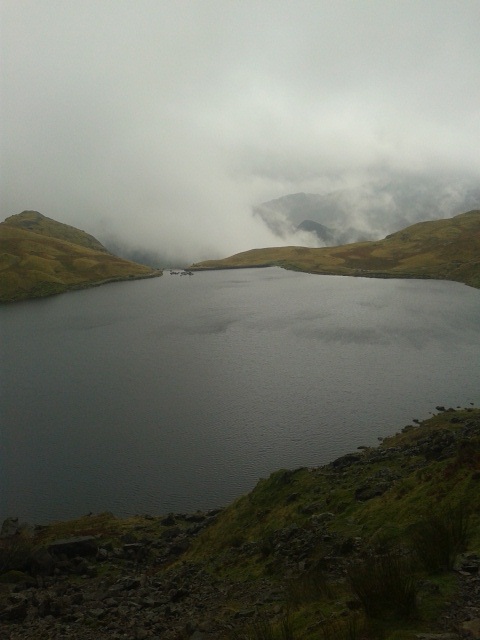
I was scrambling in the lakes, cloud clinging to the crag and swirling below us as we climbed up and up. I felt so free, so calm, so happy as I focused on nothing but the feel of the rock in my hands, and concentrated only on the movements of my body as I tried to make sure I had good grip on the slippery rock, that my weight was balanced and I wasn’t going to topple off for a briefly exhilarating flight though the clouds, followed by an extremely painful thump against the rocks at the bottom.

Image

It was wonderfully familiar feeling – the meditative movement across rock, the mind clearing joy of a breeze on your face and an open sky above me – but more than that on this occasion I enjoyed the feeling of being utterly sure of something. There is a huge and perhaps unhealthy complexity in thinking too much. Spending all day, every day considering the environmental problems of the world not only do you realise how complex some of these issues are, but perhaps even more so how complex are the underlying philosophies of how the world should be, how do we change it, how should we change it. On this particular trip to the Lakes I was thinking back a lot on Monbiot’s damning description of the scenery I love so much in the Lakes, thinking about what conservation really is, why nature is important, why it is important to me; How I felt when seeing that someone had had a fire down by a tarn – should I tut at the scorching of the land, or smile at the imagining of someone living in the land as man has done for centuries. Should I be shaking my head at the mountain bikers cutting a swath across the Lakeland fells – or rejoicing with them in their whole hearted embracing and enjoyment of nature…

But none of this seemed to matter, because part of me just knew. Mountains are important. We need them, I need them and perhaps that feeling is more powerful that all the intellectual meandering my mind had been doing all week.

Posted in Outdoor Adventures, The Environment | Tagged , , , | Leave a comment

What would it take to change your mind

It seemed like a simple enough question – “so you disgree with the badger cull – what would it take to change your mind…” But in fact it got me thinking about something pretty fundamental – and it seemed to be a theme that we’ve returned to over and over this week.

openmind1

The starting point was looking at the current badger cull and asking why is it going ahead. According to the government it is pretty simple – it is a ‘science led’ decision which made perfect sense, until you looked at the science.

In fact the results of a ten year, controlled badger culling experiment can be fairly well summarised by:

  1. It won’t work
  2. It is not cost effective
  3. In the worst case it may actually make TB in cattle worse

But we have a badger cull going on as we speak – so what is going on. It would be easy to be cynical and simply conclude Tory government + farming clamour = badger cull… and if I am honest I think you wouldn’t go too far wrong with that conclusion. However it misses some very interesting debate. After all, if the farmers believed the scientists that it would cost them more than it saved them, and that it may make TB worse – they wouldn’t be calling for a cull.

The problem is a bit deeper and seems to revolve around a few key issues:

  • What do you think the question is? How you frame the question, affects how you understand the answer. The questions, do badgers carry TB, can it be passed to cattle, is TB in cattle a problem  – can all be fairly easily answered and lead to a similarly simple answer to the question, should badgers be culled. But you could alter the question and the focus with other questions like, “what is the cost Vs benefit of culling badgers”, or even more widely “how can we control TB” (rather than the subtly different but more normally focused on, how do we eradicate TB). What about, “Why do EU directives make cattle inoculation so difficult”. Of course if we are all asking different questions it is unlikely we will agree and very unlikely that one group’s methodology will be able to change another group’s mind.
  • How do you see the world? As a scientist you may see a world which can be understood and analysed through controlled experiments. But will these controlled experiments allow you to make up your mind, let alone change someone else’s. Most scientists are extremely cautious to draw conclusions and the frustration between policy maker’s desire for a solution, a decision and action, and the scientist’s desire to fully understand, analyse and present facts are clear throughout even something as simple as the badger cull (simple at least when set against bigger issues like Carbon trading or climate change). Science is seen as all powerful in the modern world and yet it struggles to provide clear cut answers and to look at the badger cull as an example is to see how hard it is for science to change minds. Can it change the mind of a farmer – who sees the world through their own cultural, experience led knowledge of the natural world, the mind of a politician seeking consensus at best and votes or worst, or the mind of the wildlife lover who sees a moral imperative to protect wildlife – the evidence of the badger cull would suggest otherwise. Science by it’s nature acknowledges the unknowns, the remaining uncertainties, the weaknesses of the study. Into those gaps pours interpretation and criticism driven by political agendas, strongly held philosophies and different world views.

So should we instead resort to regulation and top down government to enforce change – a simple example from John Adam’s risk management suggests not. What happened when in the US they introduced new laws into 4 states to make texting whilst driving illegal? More accidents! Why – because people instead of texting relatively safely, with the phone against the steering wheel, took to texting on their laps.

“Change has to take root in people’s minds before it can be legislated” Michael Sandel

What about the all powerful businesses and the power of the market to change minds? Interesting insight for me came from another lecture this week, delivered by The Green Alliance. The topic was circular economies and the interesting work they have been involved in with major businesses and government looking at improvements in their use of resources. Here again a change of mind set is required and whilst it was clear progress was being made what struck me was how hard it was to change their behaviours, beyond what aided their business models. So some very interesting and useful work had been done on models for leasing goods, or designing products with dissembly and resource reuse in mind – but all this revolved around their desire to save money and have resource security. Money influences both businesses and consumers to change their behaviours, but generally seems to only work when there is a clear and time pressured reason to do so. We need to change more fundamental beliefs and challenge the consumer desire itself and the business model which focuses on obsellence and driving throw away culture – this change appears more difficult.

So I thought back to the original question, what would it take to change my mind – and I realised that I could think of very few fundamental and even very few incidental opinions, beliefs and ways of life which I have really been forced by science, philosophy, passion or money, to change. But the world needs a major rethink, a major change of the way we look at the world and see it’s fragility and that is not going to be easy.

Posted in The Environment | Leave a comment

Week 1, leadership, being old and the rise of technology

The end of week one of being a student and a fascinating, exciting, intimidating and brilliant first week. Setting aside the crushing realisation of the volume and scope of the topic of environmental technology, and the more crushing realisation of my relative decrepitude in comparison to the rest of the students, I’ve loved every minute of being told that now it is my job to sit, and read, and learn.

In particular, a very varied and wide reaching week has led me to consider environmental leadership, or more accurately an absence of it. In a slightly off-the wall policy lecture I wondered briefly if a man with a didgeridoo, discussing sustainability issues through analogies with the importance of sound (see didgitalis), could be the future face of environmental leadership. But in the end came to the conclusion that he was probably just a nice man, who loved the environment, and the didgeridoo – and had found an inventive, if slightly tenuous way to tie the two together.

As the IPCC were, with their fifth report, once again reaffirming – yes, we are now very very sure –  man is warming the planet, I looked to the party conference season for signs of environmental leadership. Instead we find Ed Milliband deciding that the solution is to cap energy prices, a policy proudly heralded as one of the biggest, most significant new policies announced in many years at a Labour conference. Without underestimating the assistance that possibly saving a few hundred pounds a year on energy bills will provide to some of the poorest members of our society, for this to be declared a visionary and dramatic new policy seemed only to reflect what a lack of vision and genuine leadership our current political parties can offer.

Perhaps the conservative party would offer something better.  They have, afterall, rebranded to the powerfully ‘greened’ image of the conservative tree. Large, proud, British and green – it suggests an environmental leadership which sadly appears entirely lacking with a government agreeing to choose agriculture over wildlife with the badger cull and deciding that the real problem with our energy policy is that perhaps we have gone too far with promoting green energies.  We should, after all, be trailing – doing the bare minimum, to match the slowest of our European partners according to George Osbourne’s green manifesto.

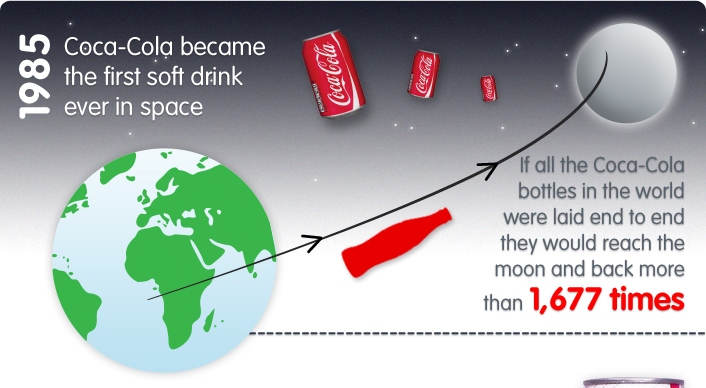
For a while I wondered if business could provide that leadership – and then I saw this…
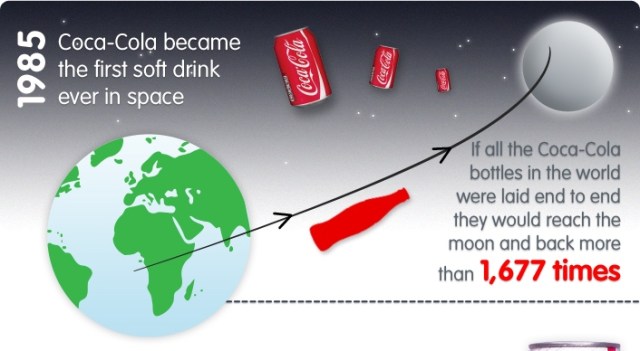
Coca cola facts

If this is one of the world’s largest company’s idea of what corporates should be proud of, we perhaps have a long way to go.

So where is our Nelson Mandela, or even where is our bottom up change of attitude and social norm which brought huge social changes to apartheid in South Africa, or a smoking ban in the UK –  examples that show that long entrenched systems and social norms can change – and they are changed by leadership which can come from all directions. Sadly it seems to be badly lacking – leaders and the public, as one, consumed by short termism over the increasingly un-ignorable realities of the effects we are inflicting on future generations. Perhaps the didgeridoo was not such a bad idea – engagement on a new emotional, intellectual and social level is what is required and any new approaches which can help just a few people achieve that are worth a try.

On more light hearted reflections from the week I’ve been struck, somewhat ironically on an environmental technology course, not by the environmental technology – but the educational technology. Learning is a thoroughly different experience to the chalk and mumble experience of a maths degree 15 years ago. Interactive online platforms containing presentations, online forms and library access, online voting on discussions via mobile phone in lectures , remote access via phone and laptop to your personal storage drive, even an app which tells you where in the University there are spare computers available.

Perhaps I am just showing my age again as I have been doing demoralisingly all week. Having started the week seeing myself outlying to the far left of a ‘years of birth of this year’s masters students’ graph I ended it by buying a cup of tea in one of the Uni cafes (obviously I had already given away my age by not buying a small skinny late or frappuccino). In order to establish the price, the lady serving me asked with a smile, “are you a member of staff sir, or a visitor”… “I’m a student” I replied, hoping for disarmingly friendly but I fear only achieving indignant and grumpy…
Posted in The Environment | Tagged , , | Leave a comment

I ate a blackberry – and I liked it…

A cycle ride on the Isle of Wight may hardly be the wilds of nature – but a recent pootle out on the bikes gave me pause to think about wild places and conservation – it was the perfect preparation for starting my masters this week…

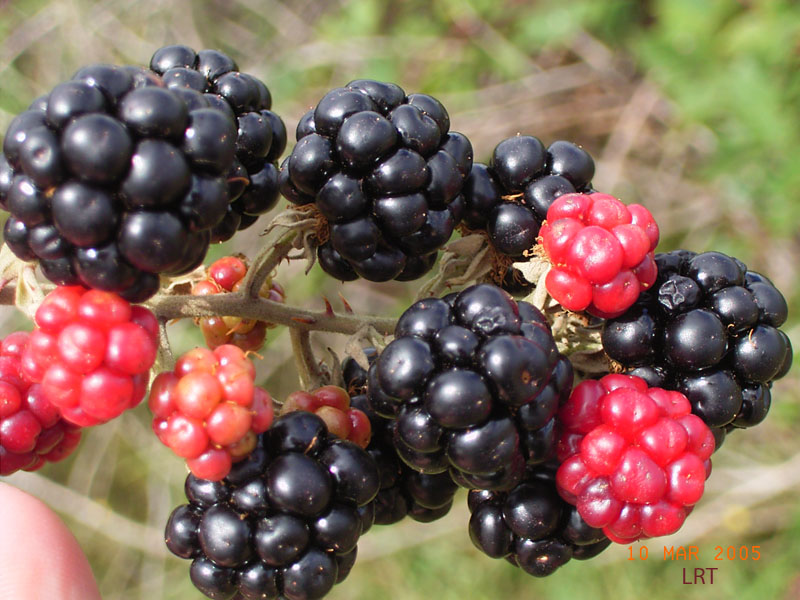
I don’t really like blackberries – so that partly explains why the one I ate on that cycle ride was the first in my living memory – picked straight from the bush, sweet and fresh. But it doesn’t really explain why neither I nor Alice could really answer the question, “Are these blackberries early or late… when do they normally come out”…

I am a nature lover, a passionate believer in the value of the natural world and our environment – yet I am so removed from the natural rhythms of the world, that I just don’t know even these most basic of facts, that you have to imagine in the past must have been second nature to every one of us.

Image

So I ate that blackberry, and I liked it. I enjoyed the novelty of the freshness, even if I still don’t really like blackberries. But more than that it was a small step in following the inspiration I have taken from George Monbiot’s latest book Feral. It’s not about eating blackberries, but what I did take strongly away from what I found a truly inspirational read, was that ‘conservation’ can be as much about enjoying, experiencing, valuing and sharing the simple, visceral pleasures and powers of nature, as much as about intellectual arguments, economic values or climate change.

That is really only one small, slightly bastardised, point that Monbiot is making in a really interesting and challenging look at rewilding and our modern view of conservation. In an era where many ecologists, biologists and economists seek justifications and ‘proofs’ I found it powerful and refreshing to recognise that it is enough to simply argue that wildness and nature can be exciting, beautiful and magnificent – and that is just as valid, perhaps even a more powerful reason to conserve it that any of the more intellectual arguments we generally focus on.

It makes me wonder and reflect in my vague career ruminations, if perhaps there is a place for me to focus on inspiring the public to experience, to feel, touch and taste nature. For once they have, I suspect there is no more powerful way to promote its respect and protection.

Posted in Outdoor Adventures, The Environment | Tagged , | 1 Comment

Rejuvenating blog… and life?

It was with some fear and amazement that I thought I’d look and see when I last wrote a blog – and turns out it was in 2011… so there was a fad which came and went!

But it is back, at least for now – and it comes alongside a new life direction – since 2011 I have moved to London, got married and now I am about to embark on a new career direction by studying for a masters in Environmental Technology.  Many of my first expeditions were environment and conservation based and for a number of years I have wanted to move back into that line of work – or at least learn more about it.

First step – 3 weeks prior to the course starting has been to start doing some reading, starting with Tony Juniper’s “What has nature ever done for us”. I was initially a little disappointed by what seemed a rather detail lacking statement of the obvious which amounted to “it’s done a lot”.  But having just reached the end of the book I am feeling quite inspired – inspired enough in fact to restart this blog.  

There are some really nice examples of environmental issues where really practical, economically sound solutions are proving that economics and environment can in fact work together.  There is also a positive feel of a movement among major business leaders which really could alter the way the world addresses environmental issues.

Perhaps what struck me most on a personal level, as I start to think about where my new masters may take me in the long term is a section on the medical and psychology benefits of the natural world.  This is something which I have always strongly believed in and fueled so many of my expeditions and indeed life decisions.  It has driven me to travel, and seek outdoor spaces, and want to share them with others.  The broader concept that there could be a tangible economic value in terms of health savings which could in turn drive greener and more sustainable living already has my brain ticking away of future directions which may be able to tie together my apparently wildly wandering ‘career’!

We will see – it may at the very least lead to a few more blogs in 2013…

Posted in Outdoor Adventures, The Environment | Leave a comment

New things

You could spend a lot of money on that harido

Hmm, looking wild and interesting

I have just got back from an amazing three weeks trekking in Ladakh to Stok Kangri – a trekking peak at just over 6100m.  It was a real rarity for me – a trip which I wasn’t leading, wasn’t involved in organising – I just signed up, turned up, trekked up and came home.

That was a very unusual experience for me – in some ways I felt I lost a lot of the experience – to not know 100% what was happening, to not be involved in every logistical detail, to not even have to cook my own tea – in some ways diminished the fullness of the experience.

On the other hand it was wonderfully relaxing – for three weeks to have nothing to focus on but the views, the summit, and mainly on trying to force enough air into my system to stay oxygenated!

Like so many travel and expedition experiences it is also growing on me on my return.  Day to day on the trip you are focused on what you are doing – its only when you are back that you reflect – I’ve been to the Himalayas, I trekked over 6000m, I saw some of the most fabulous monastries high in the mountains – both physically and methaphorically I stood somewhere new.

So now I am back, the expedition beard scrapped off and slunk away ashamedly down the sink but in small ways I feel recommitted to experiencing new things – a new beautiful running route discovered outside my house, taking a chance and getting up new climbing routes that I thought may be beyond me… and I guess this is why the travel experience is so powerful and I am already planning the next one.

Posted in Outdoor Adventures | Leave a comment